
(The second part of my Anime News Network application.)
Synopsis
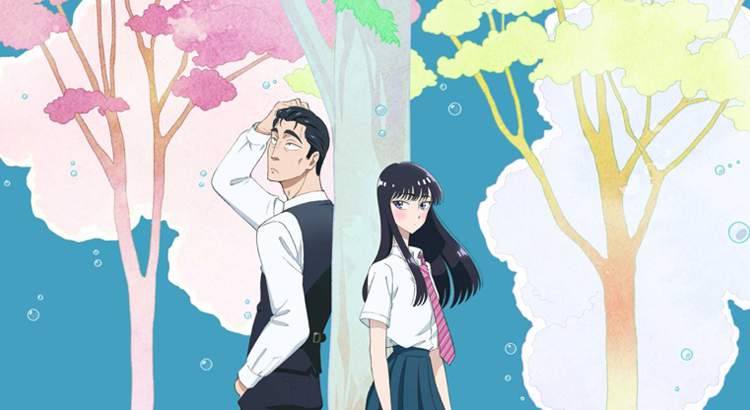
Akira Tachibana was set to be the star athlete of her high school track team, until a severe foot injury put an end to her career. Lost and withdrawn, the high schooler finds solace in her part-time job at the Garden Café, or more specifically in the Café’s middle aged manager whom she develops a crush for. Masami Kondo is a single father who spends his waning years recalling his youth and the dreams he left behind. Can this reserved girl find a way to express her feelings for him? Beneath the pouring rain, they find something in each other, a kindness amongst the storm, but can they see the light that comes after the rain.

Review
Directed by Ayumu Watanabe, whose previous works include Space Brothers and Mysterious Girlfriend X, and based on the manga by Jun Mayuzukia, comes a show about a 17-year-old girl falling in love with a 45-year-old single father. My initial reaction to this show’s premise can be easily summed up with a simple word:“nope”. I thought I’d know exactly what I’d be getting into, an uncomfortable age play fantasy where any middle aged salaryman can bag himself a teenage girl. If I had stuck with that original gut reaction then I would’ve missed a gem of a show.
The premise for “After the Rain” is highly misleading, as despite itself this show is not a romance with a considerable age gap. This show is about two broken characters, people coming from different generations and different worlds, and how they inevitable effect one another’s lives. The show opens with protagonist Tachibana raising her head from her school desk, earphones falling out to find an empty classroom. This moment perfectly displays her feelings of being alone, someone who has been left behind by her cohort. The song she’s listening too in this moment is a nice play on words “Ref:rain”, as all that fills her mind is her own refrain, the idea that she’s holding herself back… that is until the song ceases as her phone flashes with “work”.

The upbeat atmosphere of the vibrant, fun opening filled with cute animals and the theme of love creates a harsh contrast to the show that follows. This opening sequence represents the desires of Tachibana, to be seen as a woman, confess and learn about love, a fantasy in comparison to the moody atmosphere created through the imagery of the rain. Though using weather as a metaphor for the protagonist’s emotional state is a fairly simple writing technique, the way it so closely links throughout the show’s entirety to a character who struggles to express herself is in no way lazy.
The title of the show reflects this feeling, Tachibana is waiting for the turmoil in her life to end. Rather than following a character who fights for romance we follow one who is looking for shelter from the rain, waiting for it to blow over, a shelter represented by the Garden. The Garden is a family restaurant run by Masami Kondo, a place she first visited after her accident where the kindness of the restaurant manager gave her a new place to belong, somewhere to run away from her problems under the guise of a part-time job.
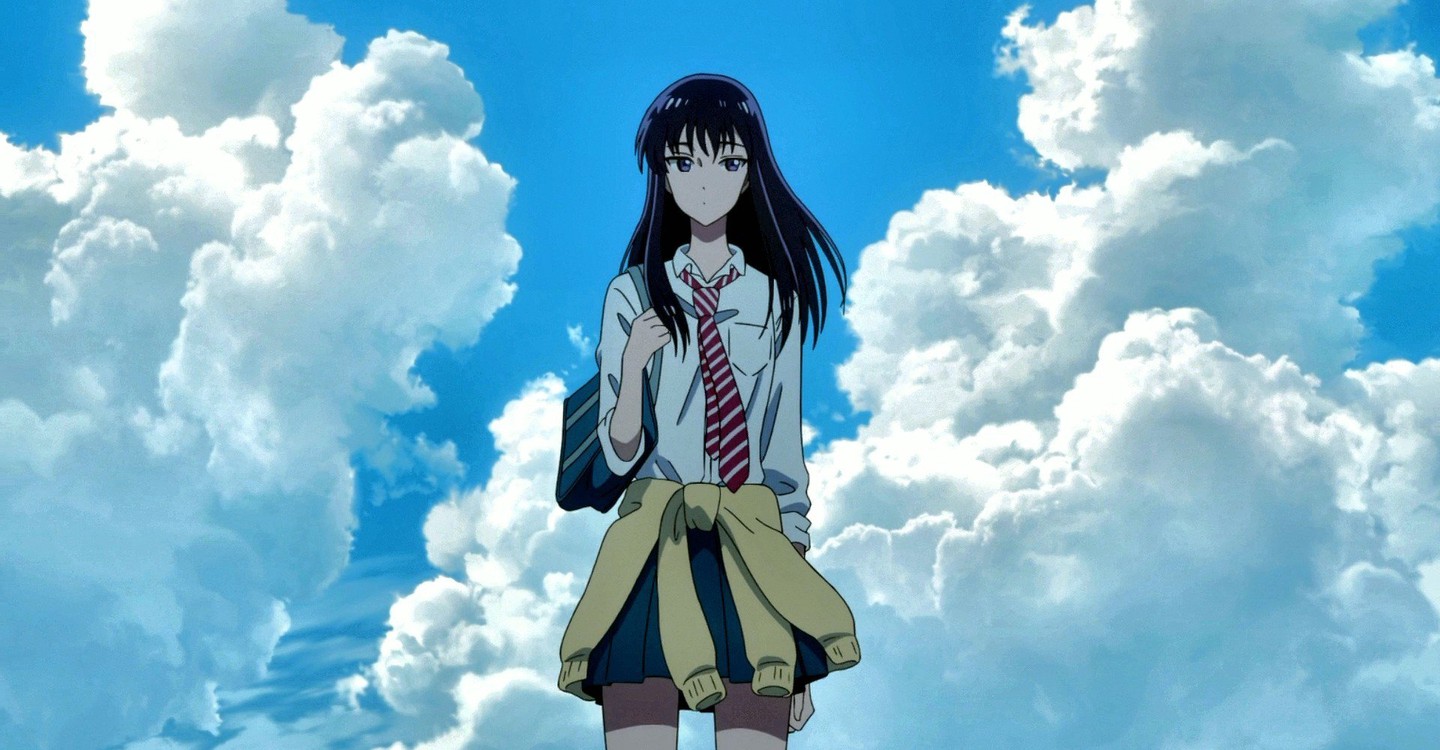
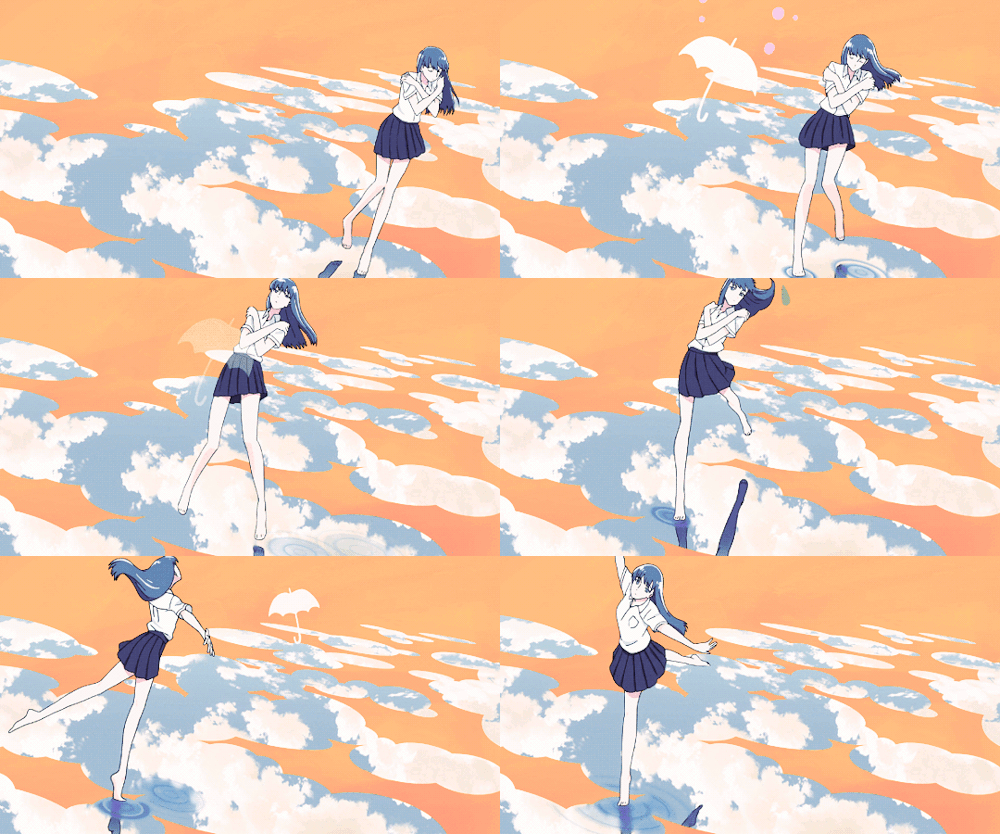
Tonally the show itself is very mellow, it’s use of soft colours complementing a more reserved shoujo art style. “After the Rain” is at its core an aesthetically pleasing series, attractive visuals as the kind of show in which the attention of shots will linger on background details, framing used to give the world a familiar tone. In addition realistic but unique character designs give feeling to a number of the cast. The sound design compliments this exceptionally well, but is very muted, not a soundtrack that one would listen to on its own as the music is used more to set the tone rather than deliver emotional punches.
By switching viewpoints and narration between Tachibana and Kondo, the show manages to maintain a balance between typical shoujo and seinen writing styles, without falling foul to typical conventions of either. This is something that comes forth as one of the show’s greatest strengths, managing to explore two very different characters without appealing to one sole audience. “After the Rain” takes inspiration from renowned film director Akira Kurasawa, which can be seen through its pacing and framing, sharing its name with the final script Kurasawa wrote and mirroring certain themes from “Rashomon”.

Part of the show’s depth, something potentially lost on a Western audience, is the Rashomon effect. This is the concept of various characters showing different interpretations of the same incident, displayed in how the moments shared between Tachibana and Kondo have a different impact and implication upon both. The show references and at one point has the characters discuss their interpretation of the moral ambiguity of thieving to survive, highlighting their standpoints as very different characters whose approaches are not subjectively wrong.
Focus on the two protagonists is key in “After the Rain”, both to the show’s strength and detriment. Though Tachibana is very well realised as a character she’s hard to relate to as a sports prodigy who suffers an accident and longs after a middle aged man. On top of this being emotionally reclusive mean the show is often a slow exercise in ‘show don’t tell’. In comparison, depending on the individual, Kondo seems like a much more relatable character. Someone openly acknowledging a lifetime regrets and mistakes but still showing room to grow makes him an inspiring character. His problems are more applicable as someone who has forgotten his grounded dream of writing to find he’s devoted his life to work.
Outside of these characters that make up the show’s core, the rest of the cast seems more throwaway. Akira’s childhood friend Haruka is given significant time but seems more two-dimensional in comparison. Though not a bad character the subplot of their rocky friendship has more appeal from Akira’s standpoint than Haruka’s attempts to understand her emotionally recluse fallen idol. Though other characters have their memorable moments their plot points are pushed aside towards the series ending, given too little time to have a significant impact. This gives the impression that the course of the plot wasn’t entirely plotted during writing. One such plot point sees a workmate blackmailing Akira into going on a date with him, this quite sinister turn seems out of place but is pretty much forgotten afterwards, they still work together with little impact leaving me feeling like what was the point? The largest hurdle for enjoyment here is still the misleading direction, those looking for romantic impact rather than a character drama will likely end up disappointed.
“After the Rain” is a series that may struggle to connect with some, choosing to slowly and tenderly pull at your heart strings rather than provide hard hitting emotional moments, however doesn’t fail to impress with a grounded and interesting take on a taboo topic. Akira and Kondo aren’t learning to love each other, they’re remembering how to love themselves again. Despite ending with a sizzle rather than a bang, that’s fine, because the journey this show took me on isn’t one I will forget any time soon.
Grade
Overall (sub) : A-
Story : A-
Animation : B
Art : B+
Music : B
+ : A pretty and touching yet mellow tale, written with consideration of the mental struggles all ages are faced with. Beautiful design leaves a lasting impression.
– : Music is only fine, animation is only okay in comparison to the art design. Misleading direction.
 Geek in the Shell