Captain Meh-vel

Spoiler-Free. (Also known as “Swing and Miss Marvel”)

“Wow, this certain is a film”. That thought was on my mind during the majority of Captain Marvel’s runtime. From this you might think I found it boring, oh no sir there’s a ton of things to talk about on this one because it’s kind of a fascinating hot mess. Back when I was an early teen I went through my Marvel comics phase after getting my hands on my father’s old comic collection, meaning I fawned over 90’s X-men and especially those inital Marvel movies. At the time they felt so fresh and unique, a high budget hero spectacular to please fans that despite having short-comings (such as “Hulk” or “Daredevil”) they tried something different to get away from the edgy anti-hero flicks of the 90’s.

Flash forward to now however and I tapped out of the Marvel cinematic universe half way through “Avengers 2”. I was burnt out, the film didn’t give me any reason to care about these characters so I just stopped. It’s not that the films had gone bad, it’s down more to the phrase “you can have too much of a good thing”. In order to meet the grand visions they’d had for the Marvel universe, creating the ultimate cinematic crossover, it felt like the other films had become an afterthought prioritising the need for fanservice over uniqueness. Rather than taking risks the films started to play it safe, following the tried and true formula to produce for deadlines, building a bigger picture rather than concentrating on individual stand alone experiences.

Related image

Captain Marvel does not break this formula. With the release of DC’s “Wonder Woman” on the horizon it felt like Marvel Studios decided they couldn’t be outdone and needed their own female protagonist rather than relying on adding Scarlet Johansson into the background of films about hot, sometimes topless, manly men. They needed to give this character a big appearance in the “Avengers” so they planned their debut of Captain Marvel right between their two part epic, setting it a strict deadline. I think this was the first huge error in producing this film.

The film feels very rushed despite development supposedly starting around the same time as “Guardians of the Galaxy”, released five years prior, and despite having numerous release date delays by about 9 months. My first thoughts after leaving the cinema were that they really didn’t know what to do with this film and no director wanted to touch it with a ten foot pole, nor do I blame them. Being flaunted as the first big female protagonist for Marvel (because everyone forgets Jessica Jones and 2005’s Electra) the film was prey to right wing trolls screaming about feminism taking over, while being a property that the studio themselves had stated they hadn’t figured out what to do with. Eventually Anna Boden and Ryan Fleck, a relatively unknown duo, stepped up to direct in April 2017. To show how late this was “Avenger’s Endgame”, due to release in April 2019, finished filming on January 11th 2018 before filming on “Captain Marvel” had even started.
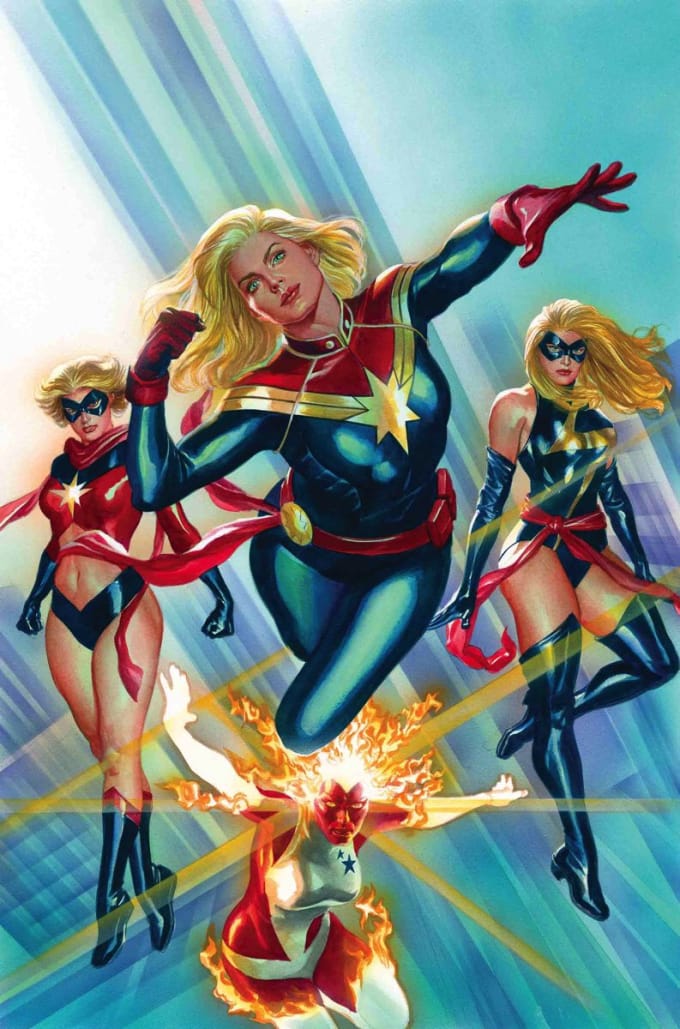
Image result for ms marvel
The various iterations of Carol Danvers, from Captain Marvel #1.

In truth I had actually been looking forward to this film, I’d always had a soft spot for the heroines of Marvel. Despite being far and few between, characters like She-Hulk, Spider Woman and more recently Spider Gwen, were all strong, confident and most importantly bad-ass women. You could tell a lot of effort went into giving them plotlines with more of a unique flavour. Ms. Marvel seemed like a great choice for an adaption (teen me crushed hard on Carol Danvers), I’d always liked the weird alien side of the Marvel Universe and this had the potential to offer a quirky, weird and wonderful take in the same style that made “Guardians of the Galaxy” stand out. Plus I’m a millenial so the 90’s references and presence of a cat meant I kinda had to see it.

The easiest sign that this film was rushed is the CG effects, when compared to other Marvel movies they’re at best passable, none of the set pieces really blow you away. At worst it had me muttering “wow that looks terrible”. There were some scenes featuring the cat where I just don’t know how someone could’ve seen it and thought “yeah, that looks fine. Perfectly like a real cat”. While the initial set pieces showing an alien civilisation are impressive it isn’t long before bland movie set corridors are brought out instead. That would’ve been okay if the writing made up for it but it did not.
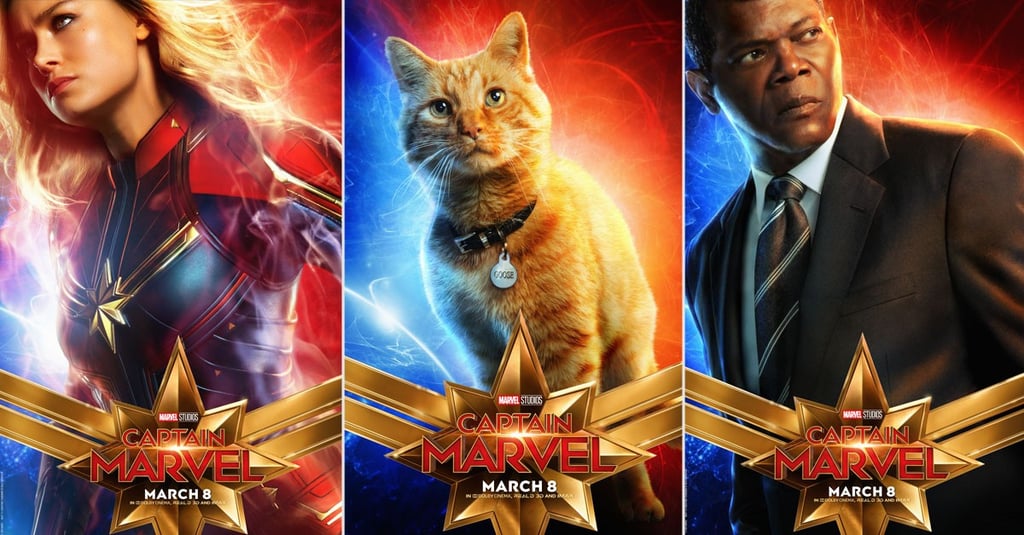
Related image

I’d heard talk about how “the film was super-feminist” and “anti-white male”, so I was surprised at how inoffensive it was. You could tell they played it safe as to not offend anti-feminist trolls and this was the films second big mistake. If you’re pushing the fact that this film has a female lead then embrace that within the film, instead Captain Marvel has a role that could’ve been played by a man and it wouldn’t have changed anything. Having to overcome the hardships placed on women in society, in any way, would have made her a considerably more interesting character. Rather than “women can be just as good as men”, showing how a super-powered heroine can be different in her own bad-ass way is a far more rewarding plotline.

Despite this the film still has “girl-power” moments which don’t tonally fit because she never has to deal with being put down because of her sex. She blows up a screen showing a guy who said “she’s emotional and can’t fly a plane because it’s called a cockpit”, but this isn’t an important factor to her character. She’s a skilled pilot and soldier so it has no meaning. The stand out moment for this was an action scene late in the movie where “Just a Girl” by “No doubt” plays; there is no point where Captain Marvel is just a girl. Throughout the whole film she is an super soldier who then discovers how to go super saiyan, so a song about breaking gender stereotypes just doesn’t fit. At no point is she a relatable character showing vulnerability, if anything Samuel L. Jackson makes a more relatable protagonist.
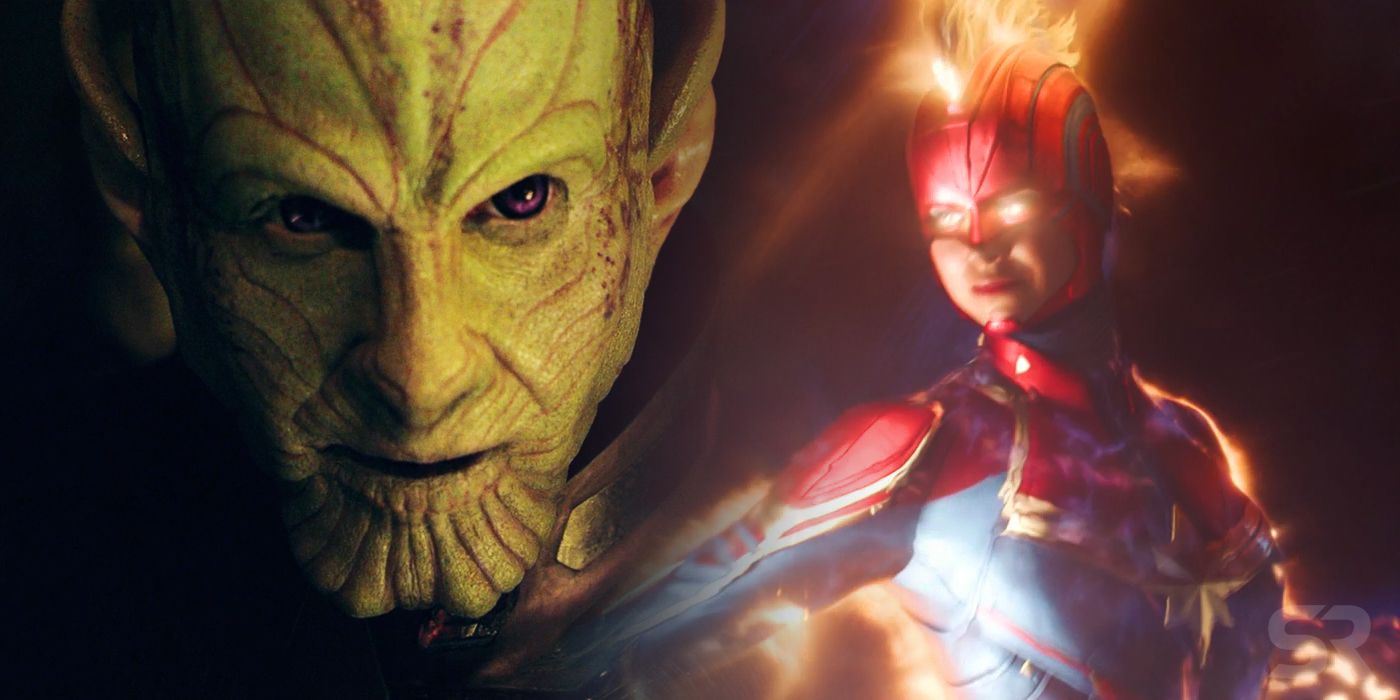
Related image

“Guardian’s of the Galaxy” was defined by it’s soundtrack, a classic homage which fit perfectly. “Captain Marvel” attempted to recreate this with 90’s nostalgia. I love the soundtrack because I’m all about alt 90’s rock, but it feels more like the director is playing their mixtape rather than choosing songs that actually compliment the scenes. “Only Happy When it Rains” plays, but it isn’t raining and she isn’t sad, she’s just riding through the desert. (“Favourite Game” would’ve been a better choice just saying). At one point “Come as you are” by “Nirvana” suddenly plays and I wasn’t the only one in the cinema with a look of confusion. The other 90’s nostagia pulls I quite liked, but they were pretty tame and a bit too obvious.

Speaking of tonal dissonace it feels like none of the actors know how to play their roles. It feels like they didn’t know what tone to go for so everyone is slightly upbeat and quick witted at all times, even for scenes that are more emotional. It’s rare for a character to feel like an actual person. I don’t think Brie Larson was a good choice for the role, not that her acting is bad, she just doesn’t bring anything to the role. She fits the generic empowerment message well but by the end Captain Marvel herself feels like a nothing character. This doesn’t help with frequent bad dialogue and directing choices. There was one scene where I thought she was going to run away shouting “everything is lies” like Cammy in the Street Fighter cartoon.

One scene in particular stands out, as our protagonist’s long lost BFF tries to have an emotional heart to heart and Brie Larson has to play it off as a wacky loveable character, I can’t think of a single moment where something is treated seriously. It’s more like a pilot for a straight to TV teen drama. There’s even a dramatic “someone gets shot but they’re actually fine” scene. Thought I can’t go into it without spoilers, the villians are bad and have no substance to their personality or motivations. There’s even a rival female so that they can have a sassy cat fight because that is a trope people think we still need apparently. I think I’ll stick to the 90’s X-men cartoon for the best character depiction thanks.

Despite how much I’ve been ripping into this film I don’t think it’s actually bad, however I’m not sure why. It’s like what if they made “Guardians of the Galaxy” with no vision and less budget? At least they tried though. The buddy-cop road trip with Samuel L. Jackson is the most memorable part of the flick, while the use of special effects to make him look younger are excellent. Long gone are the days of shiny uncanny valley Patrick Stewart in “X-men Origins: Wolverine”. The cat is good but it was always going to be, the action choreography is decent and the Kree headgear is a nice nod to the source material. Stan Lee’s final cameo makes for a great moment too. Overall it achieves what it set out to do and if you care at all about the Marvel franchise it’s worth seeing, you may end up really enjoying the fun yet risk-free ride it takes you on, just don’t get your hopes up. It’s a fine inbetween origin story but could have been so much more. Now what we really need is a “She-Hulk” courtroom drama comedy in the style of “Scott Pilgrim vs. The World”… please?

P.S. – Nevermind, it already exists.

Depression Born Romance – “After the Rain” Review

(The second part of my Anime News Network application.)

Synopsis

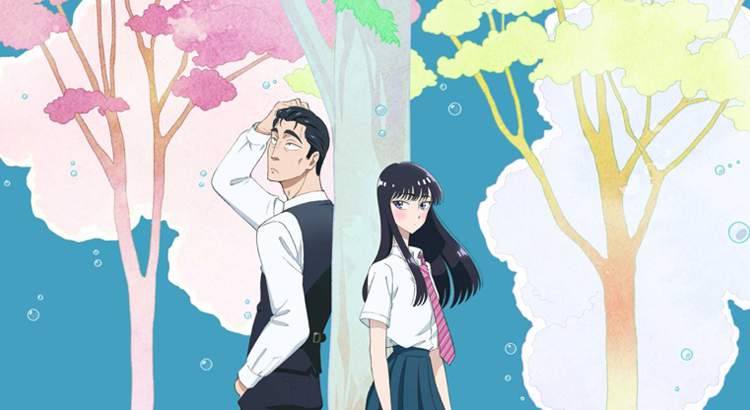
Akira Tachibana was set to be the star athlete of her high school track team, until a severe foot injury put an end to her career. Lost and withdrawn, the high schooler finds solace in her part-time job at the Garden Café, or more specifically in the Café’s middle aged manager whom she develops a crush for. Masami Kondo is a single father who spends his waning years recalling his youth and the dreams he left behind. Can this reserved girl find a way to express her feelings for him? Beneath the pouring rain, they find something in each other, a kindness amongst the storm, but can they see the light that comes after the rain.

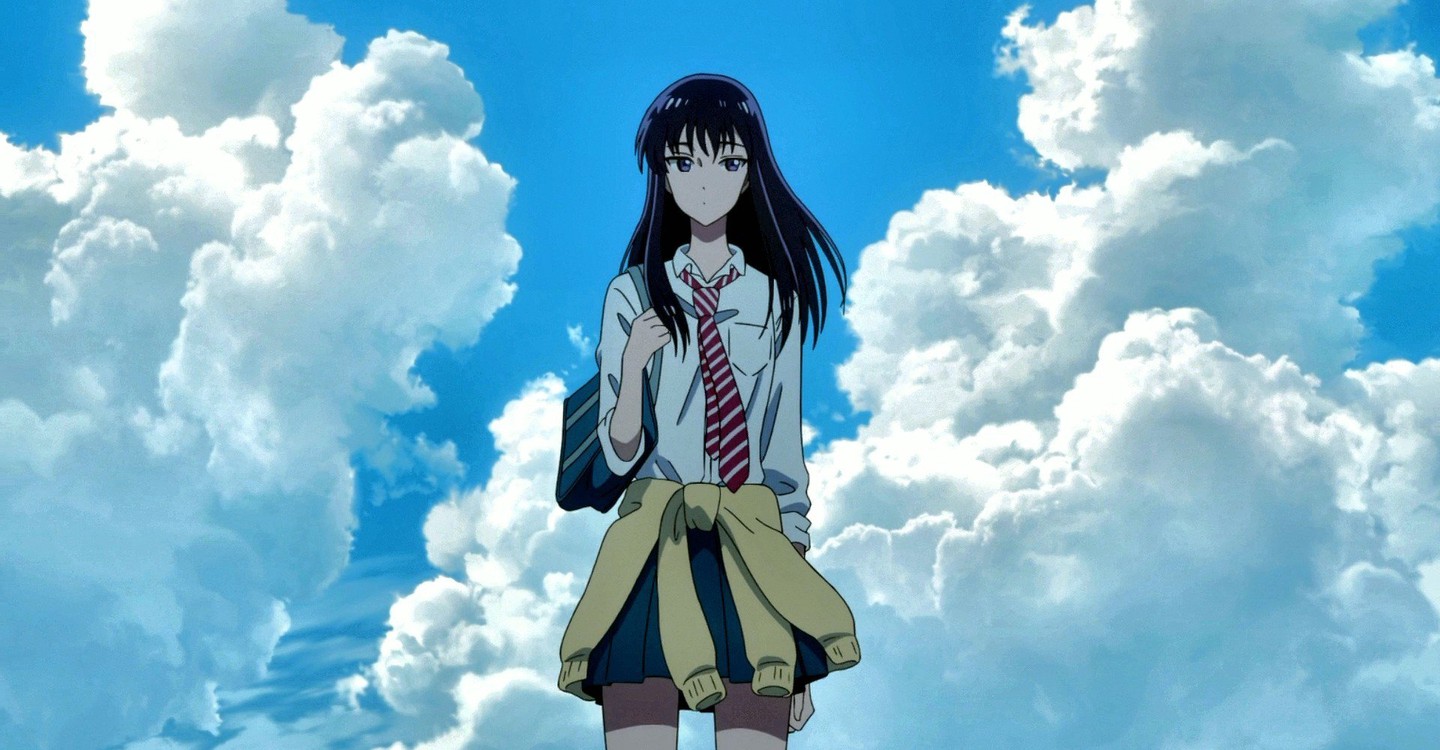
Related image

Review

Directed by Ayumu Watanabe, whose previous works include Space Brothers and Mysterious Girlfriend X, and based on the manga by Jun Mayuzukia, comes a show about a 17-year-old girl falling in love with a 45-year-old single father. My initial reaction to this show’s premise can be easily summed up with a simple word:“nope”. I thought I’d know exactly what I’d be getting into, an uncomfortable age play fantasy where any middle aged salaryman can bag himself a teenage girl.  If I had stuck with that original gut reaction then I would’ve missed a gem of a show.

The premise for “After the Rain” is highly misleading, as despite itself this show is not a romance with a considerable age gap. This show is about two broken characters, people coming from different generations and different worlds, and how they inevitable effect one another’s lives. The show opens with protagonist Tachibana raising her head from her school desk, earphones falling out to find an empty classroom. This moment perfectly displays her feelings of being alone, someone who has been left behind by her cohort. The song she’s listening too in this moment is a nice play on words “Ref:rain”, as all that fills her mind is her own refrain, the idea that she’s holding herself back… that is until the song ceases as her phone flashes with “work”.

Related image

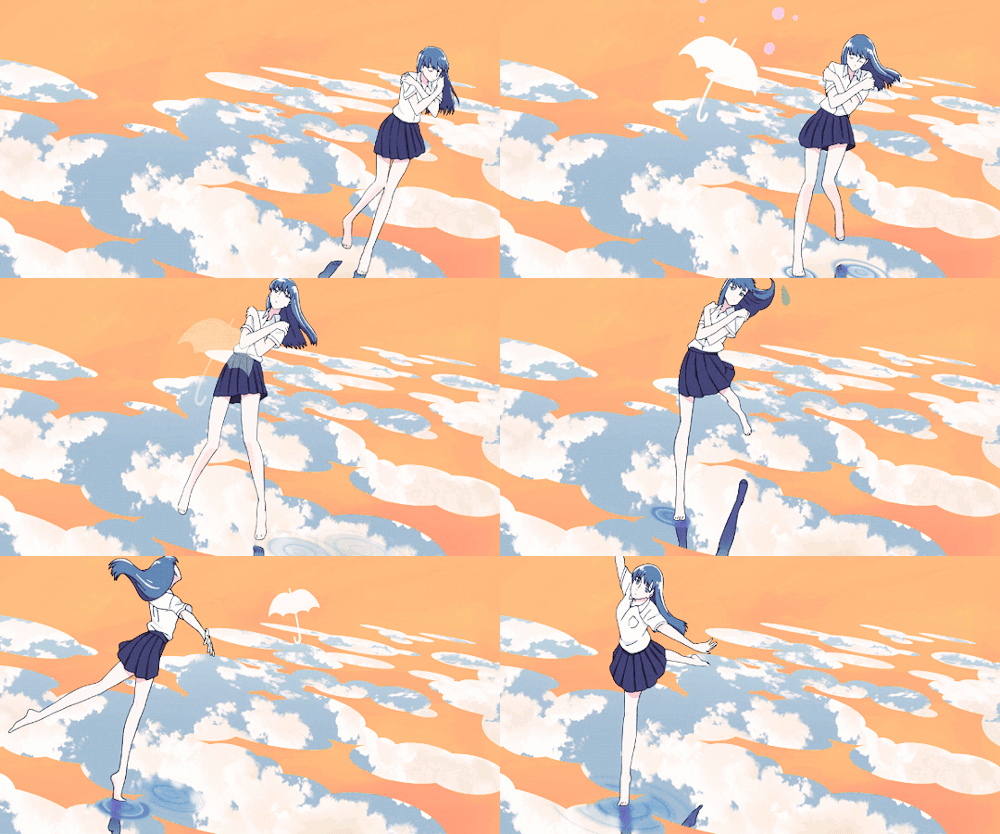
The upbeat atmosphere of the vibrant, fun opening filled with cute animals and the theme of love creates a harsh contrast to the show that follows. This opening sequence represents the desires of Tachibana, to be seen as a woman, confess and learn about love, a fantasy in comparison to the moody atmosphere created through the imagery of the rain. Though using weather as a metaphor for the protagonist’s emotional state is a fairly simple writing technique, the way it so closely links throughout the show’s entirety to a character who struggles to express herself is in no way lazy.

The title of the show reflects this feeling, Tachibana is waiting for the turmoil in her life to end. Rather than following a character who fights for romance we follow one who is looking for shelter from the rain, waiting for it to blow over, a shelter represented by the Garden. The Garden is a family restaurant run by Masami Kondo, a place she first visited after her accident where the kindness of the restaurant manager gave her a new place to belong, somewhere to run away from her problems under the guise of a part-time job.

Related image

Tonally the show itself is very mellow, it’s use of soft colours complementing a more reserved shoujo art style. “After the Rain” is at its core an aesthetically pleasing series, attractive visuals as the kind of show in which the attention of shots will linger on background details, framing used to give the world a familiar tone. In addition realistic but unique character designs give feeling to a number of the cast. The sound design compliments this exceptionally well, but is very muted, not a soundtrack that one would listen to on its own as the music is used more to set the tone rather than deliver emotional punches.

By switching viewpoints and narration between Tachibana and Kondo, the show manages to maintain a balance between typical shoujo and seinen writing styles, without falling foul to typical conventions of either. This is something that comes forth as one of the show’s greatest strengths, managing to explore two very different characters without appealing to one sole audience. “After the Rain” takes inspiration from renowned film director Akira Kurasawa, which can be seen through its pacing and framing, sharing its name with the final script Kurasawa wrote and mirroring certain themes from “Rashomon”.

Image result for after the rain anime

Part of the show’s depth, something potentially lost on a Western audience, is the Rashomon effect. This is the concept of various characters showing different interpretations of the same incident, displayed in how the moments shared between Tachibana and Kondo have a different impact and implication upon both. The show references and at one point has the characters discuss their interpretation of the moral ambiguity of thieving to survive, highlighting their standpoints as very different characters whose approaches are not subjectively wrong.

Focus on the two protagonists is key in “After the Rain”, both to the show’s strength and detriment. Though Tachibana is very well realised as a character she’s hard to relate to as a sports prodigy who suffers an accident and longs after a middle aged man. On top of this being emotionally reclusive mean the show is often a slow exercise in ‘show don’t tell’. In comparison, depending on the individual, Kondo seems like a much more relatable character. Someone openly acknowledging a lifetime regrets and mistakes but still showing room to grow makes him an inspiring character. His problems are more applicable as someone who has forgotten his grounded dream of writing to find he’s devoted his life to work.

Related image

Outside of these characters that make up the show’s core, the rest of the cast seems more throwaway. Akira’s childhood friend Haruka is given significant time but seems more two-dimensional in comparison. Though not a bad character the subplot of their rocky friendship has more appeal from Akira’s standpoint than Haruka’s attempts to understand her emotionally recluse fallen idol. Though other characters have their memorable moments their plot points are pushed aside towards the series ending, given too little time to have a significant impact. This gives the impression that the course of the plot wasn’t entirely plotted during writing. One such plot point sees a workmate blackmailing Akira into going on a date with him, this quite sinister turn seems out of place but is pretty much forgotten afterwards, they still work together with little impact leaving me feeling like what was the point? The largest hurdle for enjoyment here is still the misleading direction, those looking for romantic impact rather than a character drama will likely end up disappointed.

 “After the Rain” is a series that may struggle to connect with some, choosing to slowly and tenderly pull at your heart strings rather than provide hard hitting emotional moments, however doesn’t fail to impress with a grounded and interesting take on a taboo topic. Akira and Kondo aren’t learning to love each other, they’re remembering how to love themselves again. Despite ending with a sizzle rather than a bang, that’s fine, because the journey this show took me on isn’t one I will forget any time soon.

Related image

Grade

Overall (sub) : A-

Story : A-

Animation : B

Art : B+

Music : B

+ :  A pretty and touching yet mellow tale, written with consideration of the mental struggles all ages are faced with. Beautiful design leaves a lasting impression.

– : Music is only fine, animation is only okay in comparison to the art design. Misleading direction.

LGBT Representation in Modern Anime

(I actually wrote this earlier in the year as part of an application I sent to Anime News Network. Still a little salty that I didn’t get a reply so might as well post it here.)

I was catching up with the recent anime adaption of the game “Persona 5” when a certain inclusion reminded me of something I had hoped to forget. It was 2017 and I’d finally gotten my hands on “Persona 5”, a game I’d been highly anticipating as a fan of the franchise, but the delays seemed to be worth it for the stylish, engaging product we got. Well for the most part…. There was one moment in particular that rubbed me the wrong way, the appearance of these two characters:

The recurring characters of Beefy Trendsetter and Scruffy Romantic left me with one question, why are characters like this still appearing in this day and age? “Persona 4” came out in 2008 and that had a character struggling with their sexual identity in addition to a potentially dateable male character. While the latter was pulled just before release, this felt like a step in the right direction. It felt like a punch in the gut seeing these outdated comedy stereotypes of gay sexual predators making advances on teenage boys. It’s not funny especially in contrast with the attempts of the game to approach serious topics such as sexual harassment of female students by a teacher.

That being said I don’t think the choice to include these characters was done out of malice, in fact the game also features a character in drag running a bar who is presented much better. It feels more like a lack of understanding as to why this sort of representation is wrong. Every country has had its own issues with LGBT representation, Japan being no stranger to this. An example being comments by lower house liberal-democrat politician Mio Sugita in July of 2018 calling same-sex couples “unproductive”, questioning whether they were deserving of equal welfare benefits. Not the only comments of this nature made by the ruling house member. This led me to thinking, as an artform how does anime of the 21st century deal with a hot topic such as LGBT representation?

BL and the Okama Effect

BL, or Boys-Love, is the first thought of most when they think of gay representation. However despite a notable manga following very few anime are released in this genre. There is also a gray area as to what defines BL, being made up of yaoi and shounen ai depending on the romantic vs sexual aspects of the character’s relationships. Exploring the ideas of “forbidden love” comes with its own problematic notions, early anime adaptions often being classed as hentai with sexual harassment rather than depicting healthy same-sex relationships, something which gives the genre a bad impression amongst anime fans.

Questionable themes are still prevalent, an example of this being 2016’s “Super Lovers”, following an 8-year-old adopted by his 16-year-old step-brother. Though this 8-year-old eventually becomes 16, the not-at-all subtle undertones of child grooming were more than enough to put BL fans off. There is a definite market here, as is obvious by the popularity of sports anime amongst the BL fandom. Despite this numerous studios are unwilling to adapt some of the more well received BL manga. One example of this is “Doukyuusei” or “Classmates”, a 2016 movie adapting the short 2006 manga of the same name by Asumiko Nakamura, depicting a sweet and simple romance between two male classmates from their initial development of feelings for one another to balancing this young love against their future aspirations.

Though representation in this field can often be respectful, this is still a niche genre unlikely to reach further than its niche audience, so how is the LGBT community represented in a more mainstream sense? Outside this specific subgenre, many references to homosexuality are in line with a character created in the 1980s, Homoo Homooda, often depicted as an over exaggeration of homosexual stereotypes with dark drawn on stubble, heavy make up and a lace fan. Not only did this character introduce the slur “h**o” to Japan but became the go to depiction for “okama” (a slang term for gay men). The extent of this stereotype’s usage in anime varies: however, being seen in popular shows such as Leeron from Gurren Lagann and Bon Clay from One Piece, who despite showing outdated characterisations are often depicted as reliable, understanding and heroic individuals.

Devilman in the Franxx: Polarising Opinions

More modern takes are starting to move away from these tropes to tackle representation itself. Two very different approaches can be seen in two of 2018’s most popular series, “Devilman Crybaby” and “Darling in the Franxx”. The 1972 “Devilman” manga saw people turning against each other over fears that any regular looking person could be a devil in disguise, only for humanity to prove themselves as the greater monsters. Though the theme of non-heterosexual love was present in part, director Masaaki Yuasa’s foray into the franchise took these themes and broadened them to compare the “Devilmen” and homosexuality in a fascinating take. Devilmen are individuals with the heart of a human and the power of a demon, similar to protagonist Akira, with the introduction of two reimagined Devilmen to this adaption for the sake of this comparison.

The first is Miko, childhood friend of track team star Miki Makimura, whose life in her shadow has spurred a jealous hatred towards her alongside feelings of worthlessness, seen as she allows men to have their way with her. This is the original impression we’re given of Miko, but over the course of the series it is revealed that this isn’t her true character, but a façade that she tries to trick herself with in an attempt to hide her true feelings of romance towards Miki. She comes to this conclusion after finding no pleasure in either sexual or romantic advances from men, followed by her transformation into a devilman and her coming to terms that it’s okay to show who she truly is as those she cares about most will accept her no matter what, even if she is shunned by society.

At the other end of the scale we are introduced to Koda, a famous up-and-coming athlete more willing to accept his sexuality and identity as a devilman. A character surrounded by rumours and whose identity resulted in the accidental death of his lover, he has no one to rely on, instead believing society’s claims that he is a monster, someone who cannot fit in and instead chooses to join the demon’s side. Yuasa manages to seamlessly introduce underlying themes of sexual identity and societal expectations into a classic work without them appearing out of place, subtle comments that one does not need to notice to enjoy the work.

In comparison the comments on homosexuality made in “Darling in the Franxx” stick out like a sore thumb. Though much of it’s fanbase turned against the show due to “lazy writing” towards it’s finale, the seeds of disappointment were sown considerably earlier. The show features teenagers piloting mecha in a two-person unit, one male one female, a sexual metaphor that is in no way attempting to be subtle as they have to synchronise and rely on each other while the male character holds the female’s “butt handles”.

Enter Mitsuru, a character initially portrayed as a rival attempting to prove himself superior to our protagonist Hiro. However it is later revealed that this hatred stems from his true feelings of love for Hiro as the first person who showed him any affection and the person who gave him his name and identity. At the time I was interested as to where this was going but did not expect the character to be told that he was not in fact in love with Hiro; he was just confused because Hiro showed him affection. Over the course of the series another character “Kokoro” develops feelings for Mitsuru, which he does not reciprocate, however the show frames it as his duty to give up on his dream of piloting a mecha with Hiro and instead he must father Kokoro’s child, growing to love her over time and acting as a reliable husband.

To emphasise these themes, they’re repeated with a fellow pilot Ikuno, who expresses her love for squad leader Ichigo and her desire to pilot with her, only for this to be shrugged away as mistaken kindness. Following this we do get a scene showing a same-sex piloting attempt, but Ichigo is uncomfortable and half-hearted making this seem unnatural. This results in Ikuno remaining paired with fellow outcast Futoshi, who isn’t physically good enough to provide for Kokoro and has a scene where he acts as the priest for her wedding, taking on a literally celibate role. While “Devilman Crybaby” highlights the need for acceptance, “Darling in the Franxx” highlights the ideology of homosexuality being unproductive for society and the greater good.

The Influence of a Director’s legacy

One of the most well-known directors when it comes to LGBT representation in anime is Kunihiko Ikuhara, who despite his small portfolio has produced cult classics as the creator of “Revolutionary Girl Utena” and director of a significant amount of “Sailor Moon”. “Sailor Moon” created a phenomenon with the inclusion of one of the first canon lesbian couples of Sailor Venus and Uranus, while Utena saw a unique spin on the shoujo genre with a lead female aspiring to the role of a dashing prince and providing a psychological exploration of sexuality. Yet after this there was a notable gap of 12 years before his next significant directorial role in the 2011 show “Mawaru Penguindrum”.

While no stranger to controversial topics this series took a back step from homosexuality, the theme appearing in only a minimal amount of episodes surrounding the character of “Yuri”, who is initially presented as a strong yet elegant shoujo style character. However, another hidden side to her is revealed, characterised by the love she held for her deceased childhood saviour Momoka, leaving an emptiness that no man can fill. Despite believing herself to be an ugly human who requires fixing, someone who’ll never be accepted according to her father and sole family member, it’s the acceptance of a caring stranger that gives her a place to belong, a love that becomes her identity not just a passing phase. The depiction of this character shows her as imperfect though, abuse by her father has in turn caused her to be uncaring and abusive to others, while less of a statement on her sexuality it does lead to one uncomfortable scene in her actions towards another female character.

Ikuhara’s next foray into animation, 2015’s “Yuri Kuma Arashi” or the literal translation “Lesbian Bear Storm”, returned to focus on societal views of homosexuality. This show was widely divisive and failed to garner the popularity of Ikuhara’s previous works due to its attempts at comparing the portrayal of lesbians in wider media with anime fandom, rather than attempting to appeal to the yuri fanbase amongst other criticisms. The plot centres on the segregation of two separate worlds with two separate ideals. The human world sees lesbianism as a secretive activity to be kept behind closed doors as the young maidens of this world must retain their purity, their romances are very of the moment. It is in this world that the invisible storm occurs, a force that punishes those society chooses to exclude or rather those who choose to act outside the norm and display their sexuality rather than allow it to remain hidden. This is a clear statement on the lack of acceptance society has for homosexuality, expecting this to be just a phase of youth, while commenting on the yuri genres idealistic views of pure love alongside unrealistic standards of femininity and solidarity.

In comparison we see the world of the bears, who despite their cute appearance are dangerous predators that must be hunted down before they taint youth’s innocence and eat them leading to their death, portraying lesbianism as a danger towards youth that must be ousted. As a vicious form of sexuality in comparison to a chase one, both are shown as broken realities. With love portrayed between our two protagonists, between a bear and a human from different worlds, a love they must constantly stand trial for, must constantly defend, it is deemed a love that does not belong in either world. In other words a healthy homosexual relationship falls foul to a lifetime of oppression. The ideas explored are not new in the world of yuri manga, with many titles exploring relationships between adult women. Hence these arguably dated ideas affected the impact this show had at the time of its release rather than it’s more pressing societal commentary.

The Struggles of Trans Recognition

Though homosexuality is still a niche theme in anime it is far more prevalent than other LGBT areas. This is one of the reasons for the notoriety of “Wandering Son”, a 2011 series based on the long running manga of the same name providing a respectful yet serious take on transsexuality and gender identity of teenagers. The show follows Shuuichi Nitori, who despite being male enjoys wearing women’s clothing and appearing effeminate, and their classmate Yoshino Takatsuki, who is uncomfortable with identifying as female, choosing to attend school in the male uniform, for example. They find comfort in one another, with Nitori displaying a longing to be a female in love with a male Yoshino.

The plot not only explores gender identity but the conflicts that come with this, discovering yourself through puberty, how this affects your relationships, acceptance from family and friends, all while displaying a childlike innocence in its approach as mirrored by the soft colour palette and art style. A prime example of this occurs in the episode where Nitori plans to attend school in a female uniform, unable to see what sort of reaction this would have, stubborn in his resolve despite the advice of his friends because if female students can wear a male uniform why can’t Nitori do the reverse. “Wandering Son” is unique in its resolve to approach a difficult topic in a genuine and often harsh way, choosing realism over sugar coating, one which pays off by promoting better understanding of trans identity.

With Ikuhara’s new show “Sarazanmai” set to release in April it is theorised that this work will centre on homosexuality in teenage boys, further pushing the development of sexual representation in anime. Though negative depictions still exist in modern Japanese animation, anime exists as a unique means to express commentary on current Japanese society and to push boundaries in both a positive and negative light. The popularity of recent manga such as “My Brother’s Husband” and “My lesbian experience with loneliness”, exploring the sociological aspects of homosexuality, show that now more than ever there is a market for LGBT representation across various media forms. Especially in Japan following years of such topics being unwelcome discussion in light of social conformity and a lack of LGBT rights.

Let’s Start Things Off Right

Writing a blog seems like something that’d normally be against my nature but here we are. In general I actively avoid talking about myself, I like to limit people’s knowledge about me to the fact that I’m 23, am a huge nerd and that I like cats. This seems to be enough for most, just listen to them rant about their problems, offer common sense solutions like you’re the next Wiki How and you become the wise stoic friend rather than being ousted as the socially awkward mess you really are. Did I mention I liked cats because here are my cats?

Chi and Tsuki, my feline muses.

So why start a blog at all?

A mixture of writing practise and the opportunity to vent all the vast knowledge/opinions I have on useless nerd culture like the robot from Rocky IV. Plus it’s a way to seem productive. I’m the kind of guy who doesn’t like doing things, or people, so I especially don’t like doing things with people. Hence when asked if I want to go out and do stuff the answer is consistently “no I’d rather make an excuse, go home and feel guilty about saying no”.

As such this blog will be mainly me giving my opinions on anime, games, film, TV, music, the usual nerd affair, while giving the odd opinion piece on the current state of media industries and a rare insight into the life of white male millenial because god knows we don’t have enough of those on the internet. I guess you could say I’m an aspiring writer, though I can’t bring myself to attempt my book ideas because the concept seems so overwhelming, so as I fancy myself a critic what better to do than yell each week about things in an objective yet highly opinionated fashion.

Never forget.

Who is the man behind the curtain?

So my real name’s James and I was born in Manchester, England in 1995, the oldest of two children. I didn’t grow up in the worst area, but let’s just say that last week a man who thought I was posh changed his attitude completely and winced when I told him where I was from. At 13 or 14 I moved to a village in Cheshire, a county filled with large manor houses and pubs that serve £30 steaks rather than chavs and high crime rates. I attended a Catholic boys school, though I’m not religious just far left (this isn’t a politics blog though). I got along with pretty much everyone but was never particularly close to anyone, so I essentially lived the hermit lifestyle.

At the moment I’ve reached the “what am I even doing with my life” stage. Recently moved back home after four years at university pretending to be a scientist, it’s like regressing back to who you were pre-uni. Currently job searching while working part time minimum wage jobs and being the perfect househusbando. Went to uni at Keele, a place with literally nothing but the university, but it’s in the Stoke-On-Trent area. Stoke being a magical place filled with oatcakes, people calling you duck and drunks by midday. There I was king of the nerd societies, running my own con, and met my partner of three years.

This anime girl in Manchester no longer exists and it’s a crime against the 80’s.

Why am I such a nerd?

I always had a fascination with media, the idea that someone puts a piece of themselves into their work because they have a story to tell, that they leave behind a life’s work. From a film, song, etc, which someone releases you can get a real feel of that person, their principles and their style, an understanding of what they’re trying to tell you on an emotional level that you can’t achieve just conversing with people in everyday life. As such I’ve always had a big thing about whether something is an artpiece produced with heart or whether it’s just a souless cash grab.

Because I never went outside and the height of male conversation was “do you like Man City or Man U?”, I instead spent my time consuming media like my life depended on it. Initially I was a big film buff, horror movies and martial arts flicks were my thing, so much so that I did kung-fu for about 7 years. Later I got into comics, more a Marvel/X-men kinda guy, and music, alt/classic rock. Only got into anime at about 15, I’d seen plenty of stuff before but never really sought it out until I sort of realised how unique the aproach to the creation process was in the far East, a contrast to the usual Hollywood flair that Western movies seemed to succumb to. I’ve always been a Sony kid too.

Picture by BlueFayt Art.