

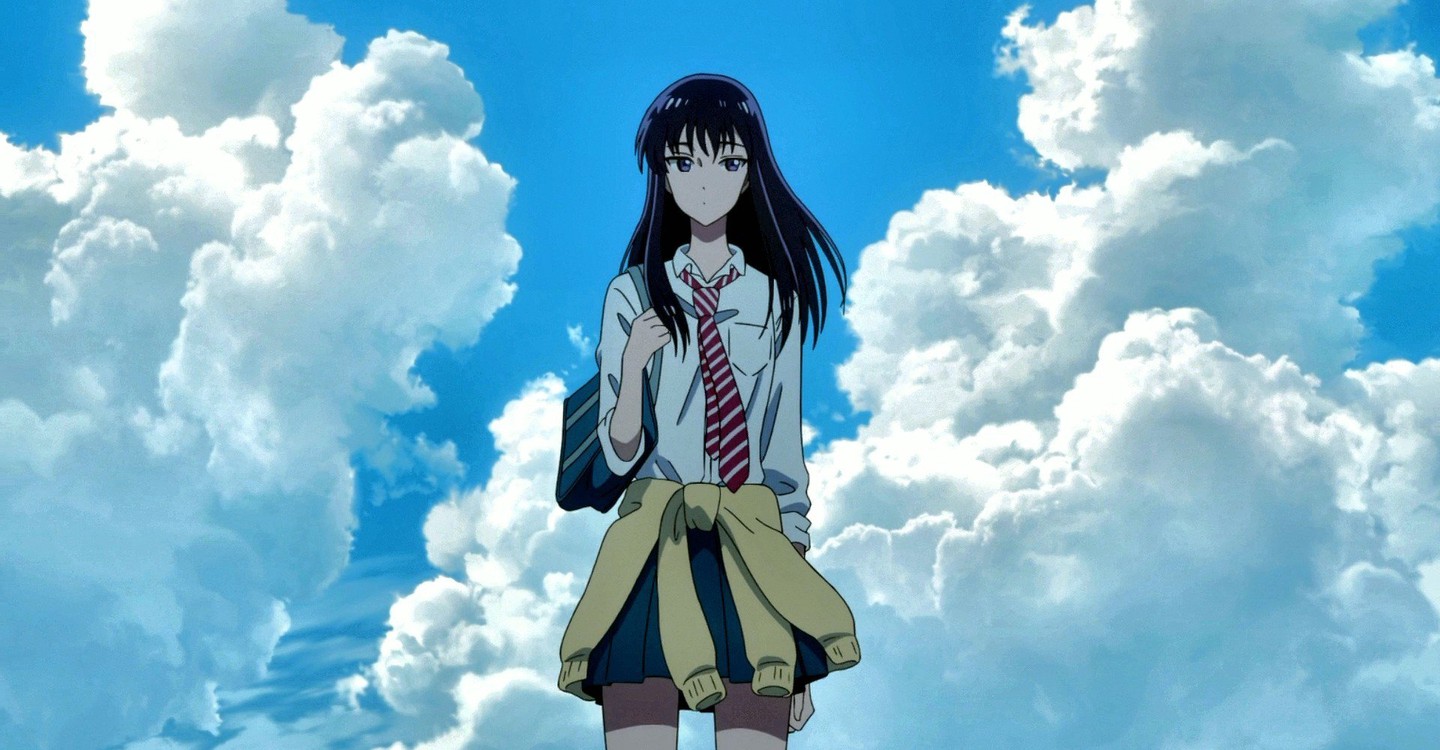
I was unfamiliar with the source material of “Rinshi!!” Ekoda-Chan”, a series of 4-koma or 4-panel gag manga which ran from 2005-2014, but what attracted me to the 2019 series was the unique production style. They gave twelve directors free reign (within reason) to each create a 3-minute short based on the source material, which included the art style, lead voice actress and music composers. As such this was an art series which, thought nothing revolutionary, was an interesting look into how different key figures in the industry interpret the same work in different ways. It’s also an educational insight into the medium of directing, with each episode also followed by a 22-minute interview with the director, lead voice actress and occasionally additional staff. I didn’t watch these segments in full though, it depended on the ratio of how much they talked about their vision for the episode versus how much was spent on irelevant stories like how the production team met.

The manga is the sole work of Yukari Takinami and ran in the “Monthly Afternoon” magazine for an adult audience. Being 25 when it began publishing, Yukari based the manga shorts off her own life as a single woman in Tokyo without a goal, drifting between relationships and jobs (usually hostess bars). Clearly it’s aimed at a very specific audience, relateable shorts for working women, despite most anime directors being middle-aged/elderly men. Titular character Ekoda seems to be framed as an out-there city woman who sits at home naked and battles against “moukin”, or “birds of prey”, women who use cuteness as a weapon to get ahead. There was a previous series of shorts in 2011 however it isn’t widely available. Though there are many other series consisting of different director’s works, it’s rare to see such a variety of takes on the same property.

Episode 1 – Directed by Daichi Akitaro
Previous Works: “Fruits Basket”, “Now and Then, Here and There”, “Sexy Commando Gaide”, “Nurse Angel Ririka SOS”, etc.
I remember the interview of this episode specifically as it starts with Akitaro saying how the shows he’s worked on similar to this didn’t do well and that he was tempted to turn down working on this because he doesn’t like having so little time to tell a story. Not the best way to start your series off perhaps. He has a lot of previous directoral roles but they vary a lot in quality, many just being average with somewhat heavy handed plotlines. He seems to have a “tell rather than show” style.
This is a very “by-the-books” adaption leading to just a generally fine episode. It’s made up of four short segments that give a good showcase of the character and the tone, seperated by short clips of her dancing naked to lively music. The first sketch covers the difficulty of seeming mature for her age, the second is about societal independence meaning less chance to rely on others, the third about people being physically draining and the last about feeling like she’s gone nowhere in life. None of the jokes hit particuarly well nor is the art style used in an interesting way, instead just looking cheaply made. The rhythm of the show works well however, you can tell he wanted to get through as much content as possible but in the end this was more detrimental.

Episode 2 – Directed by Sugii Gisaburou
Previous Works: “Dororo” 1969, “Night on the Galactic Railroad”, “Street Fighter II Movie”, “Arashi no Yoru ni”, “Glass Mask”, etc.
This is a far more interesting episode than the first (and not just because I’m a huge fan of Gisaburou’s “Night on the Galactic Railroad”). Gisaburou is considered a classic director, with his use of dramatic and meaningful set pieces. This episode consists of Ekoda sat plucking her eyebrows and lining the hairs up in rows on a handkerchief, while her partner she’s sharing a bed with speaks to his girlfriend on the phone, saying how he’s “definetly not seeing anyone else”. A “battle of attrition” is the term used, and each pluncked eyebrow represents the pains of each day which she lines up with a sort of pride. The other metaphor used is waiting for her train to come, surviving the desert heat with that hope in mind. The skit with her overthinking how to lie in bed because it could show her as needy or distant is particuarly amusing, overall this is one of the series’ stronger episodes.

Episode 3 – Directed by Akira Shigino
Previous Works: “Yatterman”, “Osomatsu-kun”, “Magical Idol Pastel Yumi”, “Chou Kousou Galvion”, etc
In this episode all the characters are animals. There doesn’t seeem to be a reason for this other than to achieve a more lighthearted tone with the humour and other than that their isn’t too much to say about this episode. It has a similar format to the first with short skits seperated by a still shot of Ekoda with a rose in her mouth, however the overall tone between them seems far more streamlined, perhaps due to the colourful art style. The director is know for more lighthearted family comedies and that certainly comes across here. The general style of these skits sees Ekoda more as a third party, commenting on the aforementioned “birds of prey”, jealousy with her sister and aquaintances’ stories of romance. It seems more like he wanted to depict Ekoda as a hard worker who gets the short end of the stick generally.

Episode 4 – Directed by Tomomi Mochizuki
Previous Works: “The Ocean Waves”, “House of Five Leaves”, “Battery”, “Pupa”, etc
This is one director with a mixed track record, personally I’m not a fan of his style and though this episode is decent I found it one of the most forgettable. This episode weaves together a few sketches to chase the idea that by being too independant she never realised she was cutting herself off from others. Here Ekoda is not a typical woman, but her uniqueness acts as self sabotage. A lot of the focus here is on her relationship with her partner “Ma-kun”, or rather how he sees her as a friend with benefits. He doesn’t want what she wants but Ekoda is too unwilling to act, just taking life as it comes and realising that it has escaped her. The themes are clear and the episode is going for a laid back feel, but with the toned down art style there isn’t really much great in this one other than the interesting take on the character which Mochizuki seems to have.

Episode 5 – Directed by Yoshitomo Yonetani
Previous Works: “Betterman”, “Food Wars”, “GaoGaiGar”, “Vatican Mircale Examiner”, etc
The art-style does a lot for this episode, with pencil like sketches really standing out, working well with the more whimsical nature in this short. Fast paced and weird (in a good way), Ekoda paints herself to become a hero before taking on a lizard, cockroach and mosquito. The idea seems to be that she is too carefree to live as a pet owner, with only a little bamboo plant in her home. It also flashes back to other manga skits, some of which were shown in previous episodes, but just using the punchlines so it largely works well. The way they show motion through the animation is visually pleasing, while the sound effects and music being done by human voice is a nice touch. Yonetani has shown himself to be a decent director and though this episode isn’t the most stand-out it’s weirdly fun.

Episode 6 – Directed by Ryousuke Takahashi
Previous Works: “Armoured Trooper Votoms”, “Blue Comet SPT Layzner”, “Flag”, “Gasaraki”, etc.
This is the rotoscope animation episode. Rotoscope is the process of animating over live-action footage frame by frame, giving a strange uncanny-valley feel. I’ve always liked the process because of how unusual it is, though many would regard it as “ugly”, having notably fluid animation and often choosing a more realistic and muted colour scheme to match. Takahashi is also considered by many a classic director for producing some hit, but mainly more niche, mecha series, in particular “Votoms”. As such this is a very different approach than I’d except for one usually dealing with the fantastical and melodramatic, a down to Earth depiction of a working woman. Aiming for a nice and positive feel rather than going for humour, as Ekoda returns from work and cooks naked before recieving a call and abandoning her meal for a night out. It tries to push the metaphor that women have many sides to their personality and that at her age she still has a youthful cunning to her, a passion that she has yet to abandon. Overall enjoyable but quite forgettable.

Episode 7 – Directed by Shin Misawa
Previous Works: “Gingitsune”, “Hang in there Tsuyoshi”, “Time of Shura”, “Fire Emblem”, etc.
Misawa is a man without many works under his belt, other than “Gingitsune” many are unknown in the West and have little acclaim. This is an episode that manages to work well as an entertaining and fun idea. The concept is based around the “red string of fate”, a sort of Eastern fairy tale (with a gruesome basis) that binds lovers together. The majority occurs in Ekoda’s dreams, as she discovers the aforementioned “Ma-kun” is not bound to her, so she attempt to follow her string into a giant sky ball of string to try and tie their fates together. This leads to her failure and realisation that the only people in life she has a fate with are her mother and sister. It’s a dark take done in an amusing way. The background art and spectacle are impressive, however the character art doesn’t quite match, looking a little out of place.

Episode 8 – Directed by Masayuki Kojima
Previous Works: “Made in Abyss”, “Black Bullet”, “Master Keaton”, “Monster”, etc
Kojima largely handles adaptions closely to the source material, small changes to keep the vision of the creator the same. It’s good to see him get a little more freedom here, as he centers the episode not on Ekoda but “friend M”. It starts with “M” at a party, drinking with a table of drunk guys who are discussing rumours about Ekoda, like her real job, asking where she is. It’s based around her friends growing jealousy but when she goes to see Ekoda and sees her dateless she kind of forgets about that, caring for her instead. It’s a sort of friendly rivalry and respect that shows how others view the titular character, as someone living a carefree lifestyle with its ups and downs. I really like the letterboxing effect as if it’s being shown on a CRT and the way the artstyle juxtaposes the sharp character models on a flat less-defined background looks great. An episode that doesn’t say a lot, going by quickly, but charming nevertheless.

Episode 9 – Directed by Takeo Takahashi
Previous Works: “Citrus”, “Maoyuu Maou Yuusha”, “Spice and Wolf”, “Rokka no Yuusha”, etc
This was actually one of the most memorable episodes, with the whole short being told from a first person perspective as Ekoda works at an insurance company call centre. The way you hear her inner thought trying to pass the time, to find joy in her menial task, is really entertaining and works great in making her seem like more of a relateable character. By having more people in the shots across the office it feels less like a look into a woman’s sad private life and more like she’s being watched as part of the corporate machine. She’s unable to even stop when disaster strikes and her work colleagues go mad at a sudden change to their routine. Visually this episode looks really nice, more due to the lack of first person viewpoints used in the medium. It’s a shame that this was the only episode without a director interview because he gets anxiety being on camera apparently.

Episode 10 – Directed by Hiroshi Nagahama
Previous Works: “Aku no Hana”, “Detroit Metal City”, “Mushishi”, “The Reflection”, etc
The worst episode. NEXT!
…
Okay I guess I have to talk about it. I had hope in the first 15-seconds as a bright blue and yellow Ekoda appears on screen in front of the chair from “Mastermind” for a quick introduction. The rest of the episode is a song about Ekoda, sung by five voice actresses sounding like they’re having an emotional breakdown while stood behind a curtain with their heads inside puppets that then have the faces animated over. Nagahama directs some weird shows but this is the most bizarre thing, if you can call it his work. The idea was actually from his modern artist friend who makes mannequins and he though “it’d be so weird that people would find it hilarious”. Well it’s so weird that it’s kind of terrible, so you met one of your goals there. The song lyrics aren’t even amusing, it’s just a general summary of Ekoda’s personality.

Episode 11 – Directed by Osamu Kobayashi
Previous Works: “Beck”, “Paradise Kiss”, ” Someday’s Dreamers: Summer Skies”.
30-seconds into this episode I thought “I bet this guy directed Beck or something”, low and behold I was right. This episode is my favourite visually, with the sketched aethestic looking gorgeous, while Kobayashi’s signiture “rock” style is apparent. Surprisingly Kobayashi hasn’t worked on many shows as chief director, thought I can believe that from the interview which is done not in the recording studio but at what looks like a bar. The interview is more of a conversation between him and his four voice actor/musician friends who he had in the episode, without them actually talking much about it, as music seems to be his main passion. This is actually a good thing, as the material of the episode works better with the director’s style, with great music and art. The episode consists of Ekoda going on a date with a rock fan, then a shoegaze fan, who seem obsessed with their musical choices rather than paying her due attention, labeling them as “worthless guys”. This is one of the standout episodes and very enjoyable to boot.

Episode 12 – Directed by Kouji Morimoto
Previous Works: “Memories”, “The Animatrix”, “Genius Party Beyond”, “Fly! Peek the Whale”, etc.
Morimoto is one of the founders of Studio 4°C, a studio well known for their shorts and video game cutscenes, and as such he works almost exclusively on shorts which is a rarity. This interview section is actually pretty great as it starts with him saying “they told me I could do whatever I wanted but then they kept turning down my ideas saying we couldn’t do that. So what if there are nipples, we all have them so I don’t see an issue with them on a late night cartoon”. Though the animation frames here are limited, it looks more stylish than cheap (unlike in episode 1) with the sharp lines and colour flair. The focus of this episode sees Ekoda sat watching TV in her apartment while pretending to be ignorant of her age to maintain her carefree attitude. It’s one of the few humour based episodes where the joke punchlines actually hit quite well. Plus what better way to end this bizarre series than by having her heart swayed by catgirl idol singers before flashing a stalker. I feel like the show is trying to display the importance of living life as you see fit and not worrying about expectations or the “norms” that society puts on women, especially in Japan.







 Geek in the Shell